
Natural Resources Management
About
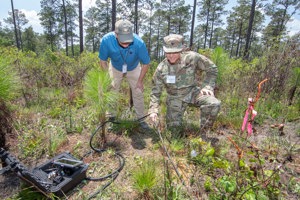
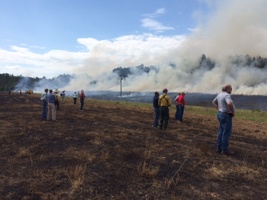
The DOW works with federal, state, and other partners to manage 27 million acres of military lands, ensuring military readiness, sustainable natural resource management, and environmental protection are achieved. Healthy, natural landscapes provide realistic training environments for warfighters while preserving critical lands, plants, animals, air, and water. These efforts contribute to resilient, connected landscapes beyond installation boundaries, benefiting both military readiness and broader conservation goals. The SERPPAS Natural Resources Management work group connects DOW and partners to drive innovative strategies that increase flexibility for addressing impacts on military missions while achieving complimentary natural resource management goals at a regional scale.
Strategic Objectives
- Identify opportunities to streamline regulatory compliance, enhance military mission readiness, and accelerate partner plans (e.g. State Wildlife Action Plans, Installation Integrated Natural Resources Management Plans (INRMPs)) through analysis and application of federal environmental laws including the Sikes Act, Endangered Species Act, Migratory Bird Treaty Act, and Bald and Golden Eagle Protection Act.
- Identify funding opportunities that will advance the implementation of programs that provide direct benefits to military installations and adjacent landscapes by conserving, managing, and supporting the recovery of imperiled species. This could include making targeted investments in focal species, habitats or ecosystems and developing habitat and multi-species crediting strategies that demonstrate return and incentivize future investment.
- Identify opportunities to proactively conserve at-risk species populations or habitats that are important to SERPPAS in a manner that would preclude the need to federally list a species (e.g. conservation agreements).
- Develop recommendations to create or improve functional corridors for wildlife and landscape resilience that support larger conservation goals and prioritize military encroachment concerns using existing geospatial information and emerging tools, such as the SERPPAS Good Map and the Southeast Conservation Adaptation Strategy (SECAS) Blueprint.
- Identify opportunities to strengthen sustainable forest and natural resource markets that incentivize private land stewardship, enhance ecosystem and habitat resilience, and maintain open space critical to military readiness.
Work Group Lead
Dr. Rebecca Harrison (Lead)
At-Risk Species CoordinatorU.S. Fish and Wildlife Service
470-925-5310| rebecca_harrison@fws.gov
Becky Harrison is the at-risk species coordinator for the Southeast region with the U.S. Fish and Wildlife Service. She has 25 years of experience in species conservation and adaptative management and has worked within diverse partner groups to create unified frameworks for strategic conservation planning and delivery.
She has degrees in Zoology and Wildlife Biology from Michigan State University (B.Sc.), Utah State University (M.Sc.) and North Carolina State University (PhD). Her post-doctoral work at University of Georgia was supported through a fellowship at the National Institutes of Health. This research used the monarch butterfly as a model system of migration to investigate how animal movement patterns are influenced by infectious disease.
Becky joined the U.S. Fish and Wildlife Service in 2011 and has worked across programs including the South Atlantic Inventory & Monitoring Network, the National Wildlife Refuge System, Ecological Services, and Partners in Flight on collaborative conservation management projects across taxa including pollinators, red wolves, sea turtles, and migratory birds. She also serves as the species recovery lead for the endangered St. Francis satyr butterfly at Fort Bragg. She has collaborated with U.S. Army personnel, natural resource managers, and researchers on conservation management issues there since 2003. Her commitment to negotiating critical resource management decisions has recognized with several awards including the Secretary of the Interior’s Commendation award in 2017.
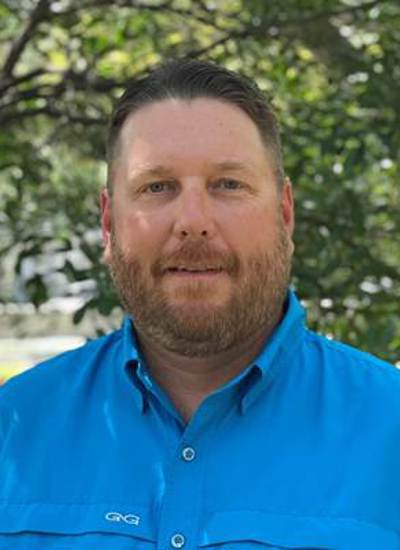
Lucas Cooksey (Co-Lead)
Project DirectorTexas A&M Natural Resources Institute
lucas.cooksey@ag.tamu.edu
Lucas Cooksey is a project director for the Texas A&M Natural Resources Institute, blending policy, planning, and practice into seamless programs that both sustain and enhance active land use alongside meaningful natural resource conservation.
With more than 20 years of experience in Natural Resources Management, his career includes appointments as a Park Ranger with the U.S. Army Corps of Engineers, serving as the U.S. Army Fort Sam Houston & U.S. Air Force Joint Base San Antonio – Natural Resource Program Manager, the Senior Natural Resource Specialist for the U.S. Army Environmental Command, and the Natural Resources Program Manager for the U.S. Army Installation Management Command Headquarters, where he lead the conservation programs on over 75 Army Installations throughout the U.S and abroad.
His development of innovative projects that balance ecosystem management and military readiness have been recognized by receiving the Texas Parks & Wildlife “Lonestar Land Steward Award” in 2010 and the Secretary of the Army “Civilian Service Commendation Medal” in 2020.
Lucas attended Texas A&M University-Kingsville receiving a Bachelor’s Degree in Range and Wildlife Management and then obtained a Master’s Degree in Biology from Texas State University-San Marcos.
Resources
Documents
Websites
Department of War Natural Resources Program
America's Longleaf Restoration Initiative
Southeastern Association of Fish and Wildlife Agencies (SEAFWA)
USFWS Southeast's At-Risk Species Finder
Southeast Regional Plants and Animals: Greatest Conservation Needs
Southeast Conservation Adaptation Strategy (SECAS)
SERPPAS ARTE Work Group Focal Species List - This list has been compiled by the SERPPAS At-risk, Threatened and Endangered Species work group. It is intended to help partners understand and identify possible overlapping at-risk species priorities in the SERPPAS region. This list is purely informational and does not inherently indicate action.
News

Land in Collier, Hendry and Okeechobee counties part of more than 21,500 acres of strategic areas approved by the state
12/17/25
The State of Florida approved an investment of $27.4 million to protect over 21,500 acres of conservation and agricultural lands across the state. The land will be placed under a conservation easement and will provide a critical buffer for key military installations while protecting water quality and aquifer recharge in the Perdido and Escambia river watersheds. The property lies within the Northwest Florida Sentinel Landscape and Florida Wildlife Corridor The acquisitions will strengthen Florida’s conservation network, support military readiness through Sentinel Landscapes, and preserve family-owned agricultural lands, ensuring the state’s natural and rural landscapes remain intact for future generations.
Visit the SERPPAS News Archive
Conserving South Atlantic salt marsh through collective action
11/29/25
The South Atlantic Salt Marsh Initiative (SASMI) is a voluntary, non-regulatory partnership of individuals working together to protect and restore salt marshes across a four-state region from North Carolina to Florida. This regional initiative is coordinated by NRI’s Amanda Gobeli, who oversees federal, state, and local partner organizations and engagement for the implementation of their conservation plan. Medium recently sat down with Gobeli to discuss how her role within SASMI is shaping the defense against specific threats to our coastal salt marshes.
Visit the SERPPAS News Archive
Bobwhite management in Central Florida creating ideal butterfly prairie habitat
11/25/25
Tall Timbers’ Central Florida Rangeland Quail Program is known for its intensive bobwhite management, but its prescribed fire practices also benefit rare species. During an October survey at Escape Ranch, Tall Timbers staff and volunteers discovered 41 Berry’s skipper butterflies, a rare Florida species, while observing 45 butterfly species and 819 individuals overall. The fire regime, which creates a mosaic of burned and unburned units, promotes healthy, diverse populations in Central Florida prairies. Escape Ranch’s commitment to maintaining large, contiguous areas of native ground cover with minimal invasive plants has resulted in the largest known population of Berry’s skipper in Florida.
Visit the SERPPAS News Archive
A conservation milestone: 62,000 acres of South Carolina forestland protected through Walmart’s Acres for America
11/22/25
The Pee Dee Basin Initiative, a multi-agency partnership, will permanently conserve more than 62,000 acres of forestland, the largest conservation easement in South Carolina’s history. The conservation easement protects vital habitat for at least 115 plant and animal species, including migratory birds, rare mussels, and Atlantic and shortnose sturgeon. It also preserves 30,000 acres of bottomland hardwoods that absorb floodwater and buffer communities from severe weather events.
Visit the SERPPAS News Archive
2026 Longleaf Landscape Stewardship Fund RFP Released
11/19/25
The National Fish and Wildlife Foundation released its 2026 Request for Proposals for the Longleaf Landscape Stewardship Fund. This funding supports projects that advance longleaf pine restoration to benefit wildlife, improve water quality, sequester carbon, and enhance forest resilience. Limited funding is also available for the restoration of bottomland hardwoods.
Visit the SERPPAS News Archive
Conserving the Gulf, creating jobs: Reflections on building GulfCorps as a landscape conservation and stewardship program that weaves together workforce development and ecological restoration
11/1/25
Launched as a collaborative effort in the wake of the BP Deepwater Horizon Oil Spill in 2010 between The Nature Conservancy and dozens of federal, state, and local partners, the GulfCorps program offers a chance for young adults in the Gulf states to be a professional in a field that manages their own environment. The GulfCorps represents a powerful approach to improving landscape resilience through a community-led restoration approach that recognizes workforce development as a long-term strategy for advancing better futures for our lands, waters, and communities.
Visit the SERPPAS News Archive
Events & Webinars
- Web Forum: Raising cane and reviving relationships
-
March 19, 2026
Presentation by members of the Rivercane Restoration Alliance will generally discuss the current restoration efforts for native rivercane across the Southeast. Hosted by the Southeast Conservation Adaptation Strategy (SECAS) - 4th International Smoke Symposium
-
March 23 - 27, 2026
Tallahassee, FL - Burning For Birds - A Manual for the Application of Prescribed Fire in High Marshes on the Northern Gulf Coast
-
April 10, 2026
SFE Webinar from the University of Illinois Urbana-Champaign, Tall Timbers, the Southern Fire Exchange, and the University of Florida IFAS hosted on Zoom - National Conference on Ecosystem Restoration
-
April 13 - 16, 2026
Omaha, NE - 2026 SERPPAS Principals Meeting
-
April 27 - 28, 2026
Southern Pines/Pinehurst, NC - 2026 Southeast Land Conservation Conference
-
April 28 - 30, 2026
Greenville, SC - Gulf Conference 2026: The Annual Meeting of the Gulf of America Alliance
-
May 4 - 7, 2026
Mobile, AL - 8th Fire in Eastern Oak Forest Conference
-
June 2 - 4, 2026
Bloomington, IN - Restore America's Estuaries 2026 Coastal & Estuarine Summit
-
September 22 - 25, 2026
San Francisco, CA - 13th U.S. Symposium on Harmful Algae
-
October 25 - 29, 2026
Cedar Rapids, IA - 80th Annual SEAFWA Conference
-
October 26 - 30, 2026
Nashville, TN
SERPPAS Meetings
April 2026
- 2026 SERPPAS Principals Meeting
-
April 27 - 29, 2026
Pinehurst/Southern Pines, NC